










Diagnostic Techniques
We have pioneered the use of many diagnostic techniques, but what sets Paracelsus
apart is the manner in which we compose a complete picture of all the factors that
have led to the patient’s illness, and therefore what must be changed to restore
health. This is the opposite of the reductionist thinking of conventional medicine
and its specialists, who ironically spend very little time looking at root causes
of disease.
Our major diagnostic tools include:
- In-depth health history and physical examination. Your initial
examination may take more than an hour. In this time, your doctor will review your
health history, your current situation and goals, examine you physically, and answer
all your questions. During your stay, you will see your doctor an average of three
times per week, and he or she will supervise every step of your daily care. At the
initial physical examination, your doctor uses the information provided to explore
and understand your body. You are examined by your doctor both clinically and personally.
There is no standard checklist of vital signs to evaluate; instead, the physical
exam you receive is personalized to your own situation. In addition to your physical
condition, we use this aspect of the exam to determine the vitality of your energy,
providing us further insights into your unique condition. At the conclusion of the
physical exam your doctor will determine what diagnostic tests to run, offering
the final piece of information we need to begin creating your therapy and treatment
plan.
- Darkfield microscopy. Just as every cell of your body contains
your complete DNA, so every drop of your blood is a complete picture of your internal
milieu, showing us the function of your digestion and immune system, levels of oxidative
stress, disease tendencies, acidity and protein levels, bacteria and parasites,
and much more. This helps us prioritize steps in your care and track your progress.
- Blood tests for toxicity, metabolic function, genetic profile,
immune function, allergy and digestion, and specific health conditions. Our test
panels are state-of-the-art and provide invaluable insight into the reasons for
the patient’s illness and health of major organs and systems. Recent innovations
include the TKTL1 test for cancer aggressiveness and the PCA-3 test for prostate
cancer.
- Examination of intestinal flora to determine its health and impact
on your immunity.
- Heart rate variability testing (HRV). The heartbeat is remarkably
complex, and subtle changes from beat to beat reflect a kind of conversation between
the sympathetic and parasympathetic nervous systems. Now accepted as a critical
diagnostic tool even by conventional cardiologists worldwide, what is unique at
Paracelsus is our patented use of music in a feedback mechanism to help you train
your parasympathetic system to enhance your healing and immune function, and our
ability to tie HRV tests to other diagnostic and therapeutic measures.
- Computerized Regulatory Thermography (CRT). This technique involves
taking the skin temperature of 120 different points on the body, each corresponding
to a specific organ of the body. Two sets of readings are taken – an initial reading
and then a second reading after the patient has sat quietly in a room disrobed for
10 minutes. While the patient is sitting there disrobed, the body will naturally
begin to cool and will be stimulated to try and regulate itself. By using a computer
program to compare the two sets of readings, your doctor has another view into your
internal environment and your ability to regulate yourself, assisting in identifying
regulatory, metabolic, and organ dysfunction at a very early stage. CRT is also
helpful in indicating whether you have possible food allergies so we know to perform
additional tests to identify specific food allergies.
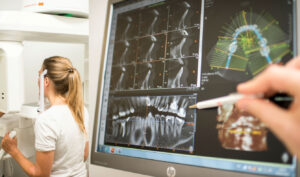
- Other physical tests, including x-rays (especially dental pantagraph)
and sonography. While x-rays are used sparingly, every patient is given a dental
pantagraph to reveal loci of infection that so commonly appear alongside disease.
Sonography is a safe, non-invasive means of examining tumors and especially good
at measuring vascularity, a key indicator of tumor aggressiveness.
Learn About:
- Biological medicine
- The regulatory forces of the
human body
- The Diagnostic
techniques used at Paracelsus
- The therapeutic methods
used in treatment
- Restoring the body to health
- Becoming a patient